Service
Sea Freight
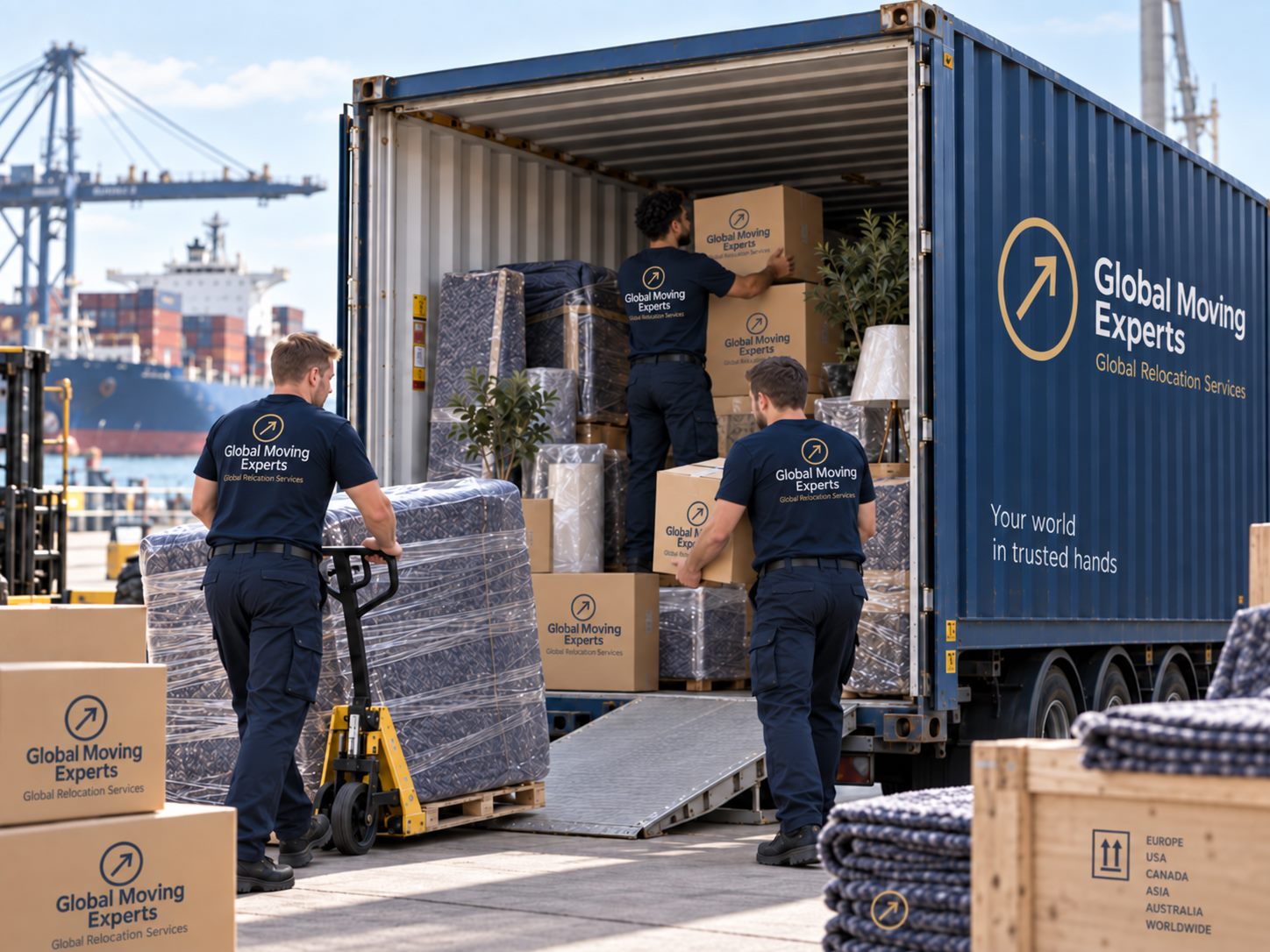
For moves that cross an ocean rather than a border, sea freight is the standard way to transport household goods. It takes longer than road transport within Europe, so planning generally starts earlier and the moving date needs more lead time.
- Used for
- Overseas relocations — USA, Canada, Australia, UAE and beyond
- Transit time
- Longer than road transport — varies by port pair
- Requires
- Export-grade packing and destination customs clearance
We coordinate the full journey — packing, port handling, the sea transit itself, and delivery once your shipment clears customs at destination — so the distance involved does not translate into added complexity for you.
Sea freight has a reputation for being complicated, mostly because it involves more visible steps than a road move — a port, a vessel, a customs process at the other end. In practice, none of these steps are unusual for us; they simply need to be planned earlier and more precisely than a road move, since there is far less room to improvise once a container has left port.
How sea freight transit works
Your goods are packed, loaded into a shared or dedicated container, transported to the departure port, shipped to the arrival port nearest your destination, cleared through customs, and then delivered to your new address. Each stage has its own lead time, which is why an overseas move needs to be planned as a whole timeline rather than a single booking.
Realistic timelines
Transit time depends heavily on the specific departure and arrival ports involved. We discuss realistic timelines for your route before you commit to a moving date, rather than quoting a generic figure that may not apply to your specific journey. As a general pattern, transatlantic and transpacific routes typically take several weeks; routes to Australia are often among the longest given the distance involved.
Customs and documentation
Nearly every overseas destination requires customs documentation for household goods, typically including an itemised inventory. We help prepare what your destination country requires — see the relevant destination page for country-specific detail, since requirements genuinely differ between, for example, the US, Canada, the UAE and Australia.
Packing for the sea freight journey
A multi-week sea crossing puts different demands on packing than even a long European road move — humidity, vibration over a longer period, and more handling points between departure and arrival. Our packing service uses export-grade materials suited specifically to this, rather than materials designed for a shorter journey.
Shared versus dedicated container for sea freight
As with container moving generally, your goods can travel in a shared container alongside another household's shipment, or in a dedicated container reserved solely for you. See our container moving service for how we help you decide between the two based on your volume and timeline.
Coordinating sea freight with your own travel plans
For many households, sea freight means your belongings and your own travel do not arrive at the same time — you may fly ahead while your goods are still weeks from delivery, or vice versa. Planning for this gap, whether through short-term furnished accommodation or simply setting expectations in advance, is worth doing early rather than working it out once you have already arrived.
Explore more
Related services
Container Moving
Shared or dedicated container shipping for long-distance and overseas relocations.
Learn more →Professional Packing
Full or partial packing by a team trained for international transport, not just a local move.
Learn more →Storage
Short or longer-term storage when your moving dates do not line up on both ends.
Learn more →FAQ
Sea Freight — frequently asked questions
Why does sea freight take longer than a European road move?
Sea freight covers much greater distances and involves port handling and customs clearance at both ends, which together take longer than a direct road journey within Europe.
How early should I book sea freight for an overseas move?
Two to three months ahead is a reasonable starting point for most overseas routes, given transit time, port processing and destination customs clearance all need to be accounted for.
Does sea freight cost more than a European road move?
Generally yes, given the distance and the additional stages involved — port handling and customs clearance in particular. See our international moving costs page for the full breakdown of factors.
What happens to my goods once they arrive at the destination port?
They clear customs and then travel onward to your actual address, which we coordinate as part of the same booking rather than a separate arrangement you would need to organise yourself.
Can I track my shipment during the sea crossing?
We keep you updated at the key milestones — departure, arrival at port, and customs clearance — so you have visibility without needing to chase updates yourself.
Need sea freight for your international move?
Tell us about your move and we will get back to you with a personalised quote.